Wednesday, 30 July 2014

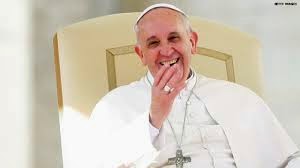
Pope Francis' top 10 secrets to happiness


By Carol Glatz

Slowing down, being generous and fighting for peace are part of Pope Francis' secret recipe for happiness.

In an interview published in part in the Argentine weekly "Viva" July 27, the pope listed his Top 10 tips for bringing greater joy to one's life:

1. "Live and let live." Everyone should be guided by this principle, he said, which has a similar expression in Rome with the saying, "Move forward and let others do the same."


2. "Be giving of yourself to others." People need to be open and generous toward others, he said, because "if you withdraw into yourself, you run the risk of becoming egocentric. And stagnant water becomes putrid."

3. "Proceed calmly" in life. The pope, who used to teach high school literature, used an image from an Argentine novel by Ricardo Guiraldes, in which the protagonist -- gaucho Don Segundo Sombra -- looks back on how he lived his life.

"He says that in his youth he was a stream full of rocks that he carried with him; as an adult, a rushing river; and in old age, he was still moving, but slowly, like a pool" of water, the pope said. He said he likes this latter image of a pool of water -- to have "the ability to move with kindness and humility, a calmness in life."

4. "A healthy sense of leisure." The pleasures of art, literature and playing together with children have been lost, he said.

"

Consumerism has brought us anxiety" and stress, causing people to lose a "healthy culture of leisure." Their time is "swallowed up" so people can't share it with anyone.

Even though many parents work long hours, they must set aside time to play with their children; work schedules make it "complicated, but you must do it," he said.

Families must also turn off the TV when they sit down to eat because, even though television is useful for keeping up with the news, having it on during mealtime "doesn't let you communicate" with each other, the pope said.

5. Sundays should be holidays. Workers should have Sundays off because "Sunday is for family," he said.

6. Find innovative ways to create dignified jobs for young people. "We need to be creative with young people. If they have no opportunities they will get into drugs" and be more vulnerable to suicide, he said.

"It's not enough to give them food," he said. "Dignity is given to you when you can bring food home" from one's own labor.

7. Respect and take care of nature. Environmental degradation "is one of the biggest challenges we have," he said. "I think a question that we're not asking ourselves is: 'Isn't humanity committing suicide with this indiscriminate and tyrannical use of nature?'"

8. Stop being negative. "Needing to talk badly about others indicates low self-esteem. That means, 'I feel so low that instead of picking myself up I have to cut others down,'" the pope said. "Letting go of negative things quickly is healthy."


9. Don't proselytize; respect others' beliefs. "We can inspire others through witness so that one grows together in communicating. But the worst thing of all is religious proselytism, which paralyzes: 'I am talking with you in order to persuade you,' No. Each person dialogues, starting with his and her own identity. The church grows by attraction, not proselytizing," the pope said.

10. Work for peace. "We are living in a time of many wars," he said, and "the call for peace must be shouted. Peace sometimes gives the impression of being quiet, but it is never quiet, peace is always proactive" and dynamic.

Wednesday, 23 July 2014

Five Ways to Sanctify Your Day

By SAM GUZMAN

We all live busy lives, rushing to work, running errands, and navigating rush hour traffic. With all the busyness, it’s hard to live a prayerful life and be mindful of God’s presence, even if we want to. But ultimately, quietness comes from within,  and incorporating holy habits into our lives can help us keep recollected in the midst of all the noise and chaos of the modern world.
Here are five simple ways to slow down and live a more peaceful and prayerful life.

1. Spend Time in Prayer in the Morning

Trust me, I know how hard it can be to drag yourself out of bed in the morning. The feeling of grogginess can be hard to shake. But is important to start the day with prayer. In my own experience, my day is productive and peaceful in direct proportion to my ability to get out of bed and spend time in prayer and spiritual reading. When I do this, I find myself more peaceful, more patient with others, and more recollected to God’s presence throughout the day.  But when I hit the snooze button, the rest of the day, including my interactions with others, seems to suffer.
I know it can be difficult to know what to do when you make time for prayer, so I will share my own morning routine in a future post.

2. Say A Hail Mary

When I sit down at the computer, my first impulse is to start anxiously checking emails and reading my favorite news websites. Instead of giving into this impulse, however, I have gotten in the habit of saying a Hail Mary before I do anything else—many times before I even turn on my computer. I ask Our Lady to bless my day and guide my priorities. My work day is inevitably less stressful and hurried when I start it in this way.

3. Say the Angelus

The Angelus is a beautiful, time-honored prayer that reminds us of the miracle of the incarnation and the importance of conformity to the will of God. It is also a great way to pause, turn your heart to Our Lord, and take a deep breath, so to speak, in the middle of a hectic day. Traditionally, it is prayed at the noon hour, so maybe you could start your lunch break by praying it.
We don’t all have jobs where we can pray the Angelus, but if you do, I would encourage you to set an alarm and pray it tomorrow.

4. Pray the Rosary

The rosary is one of the most popular and well known Catholic prayers, and for good reason. When prayed with concentration and devotion, it is one of the best prayers we can pray. Our Lady of Fatima asked all the faithful to pray the rosary daily, so it should be the one prayer we manage to pray, even if we can’t make time for anything else.
Consider praying the rosary after dinner. It is a great way to spend time with Jesus in Mary at the end of your day. If you have a family, pray it as a family. If you can’t find time during the day, try praying in the car on the way to work. Whatever you do, pray the rosary.

5. Examine Your Conscience Before Bed

Sin is a reality, and chances are, we are saying, thinking, and doing things that are displeasing to God throughout the day. If you don’t think so, you are deceiving yourself. Go to bed with a clean conscience by examining yourself daily. Pause before bed, cast your mind’s eye over your thoughts and interactions with others, and ask yourself if you’ve done anything displeasing to God. Then, think of  Jesus crucified, full of love for you. Tell him you are sorry for your failings and resolve to do good by saying an act of contrition.

Conclusion

It is easy to get distracted and forget God’s presence throughout the day. Reminding ourselves of God’s presence often requires sanctifying our day with good daily habits.

Friday, 24 January 2014

THE NATURE OF SIN


I recall the physics lessons in high school, specifically that of the elasticity of springs. If my memory serves me right- which I have no doubt it does for it has religiously stored my numerous memories even from childhood- the physics teacher demonstrated how springs are able to extend when they are loaded. You add a load to the spring and it stretches, you offload it and the spring returns to its original shape and size. You load the spring again with a larger load and it stretches more and with the removal of the load it regains its shape and size albeit taking more time. However when the spring is loaded with too much load, it stretches and straightens, never to return to its original shape and size even after the removal of the load. This my analogy might be alien to those who loved to hate their physics teachers but forgive me for it fits my use here in.
One starts with a clear conscience of what wrong and right is, then they choose to test the wrong and feel what it is like. Of course that is easy, what will it hurt just to do it once? What is one puff, one bottle, one night? After all am not an addict I will just stop when I have had this one. The poor soul leads itself to the trapping of its own doing. After this, one feels guilty and deeply sorrowful for having erred.  With the first experience comes the heightened need for more and if one gives in to the urge, they add more load to the spring.  And as the spring is loaded more and more, it loses its elasticity. One feels less guilty now and what they used to condemn they start defending. Their guilt is lost and they feel nothing, they act like nothing and as they soil themselves in sin, they convince themselves with vanity of their lost verbosity.
I surely witnessed this on my way to Kayole in the famous Green and Yellow Forward traveller buses. A large sticker on the bus read “I FEEL NOTHING” and surely the driver and conductor in that bus felt nothing. The unkempt hair of the driver revealed it, what is more, he must have either been blind or ‘felt nothing’ for he paid no heed to any of the traffic rules. The conductor was not better, his breath almost made people drunk, he screamed to everybody even those who were a stone throw from him. They however made me closer to God for I said countless prayers in that bus.
All in all, the nature of sin is in feeling nothing. One starts with a conscious mind clearly knowing right from wrong but with bowing to pressure mostly for pleasure, the conscious is desensitized and what they used to detest is now praised and defended for they feel nothing. Guard your conscious and let it not be loaded beyond repair for you will feel nothing and be nothing but will not even realize as you will be foolishly happy in the firth of nothingness.
RITH@


Tuesday, 14 January 2014

HEAR MY PLEA


I call upon you for you will answer me; bend your ear and hear my whisper. Guard me as the pupil of the eye; hide me in the shade of your wings for far from you my foes multiply. Let not your grace depart from me for I have tasted and seen that you are good and sufficient for me. Twice have I known of how your love is great: once when I stayed under your wings and drank from your cup of loving grace and then when I departed trying in vain to forge my path alone.
How great thou art that you open the palm of your hand and feed the whole world. You are to be praised for in you all who search for peace rejoice. Those who seek your face you reveal to them in full the glory of thy being. From dust your breath makes into being that which had no being. When we revolt and turn our faces from your light, who but you makes us see the darkness in us? Who is He that washes us whiter than snow when we stain our given life? Who purifies and restores these vessels when we have corrupted them to the core? When as scarlet our sins are red, who does cleanse us and save us from ourselves?
Let not your goodness and mercy depart from me for any moment. You strengthen me to stand tall when I sit by thyself, hear my plea you who are the light and guide my path by your truth that I may not be far from you. Hear this plea and grant the desire to be by you for I have tested and known that I deceive myself in revolting for you are the source and detachment from you will be alienation from hope and life.
(Inspired by homily from Fr. Kanja 2012)
RITH@.


Wednesday, 4 December 2013

HEALTH


Of what use is it to a man if he gains the whole world and looses his own soul? When a man’s body is ill, he labours ceaselessly in search of a physician to prescribe remedy. Bitter herbs and tabs he takes to regain his health. With improved health the man relaxes and says to himself’ all is well’. Of what value is it if I gain my physical health when my spiritual health is below the poverty line? What is the delight in having a healthy body carrying a wrecked spirit? What wisdom is there in rejoicing having a healthy body while the life of the body cries of ailment?
When the body is well, the carrier ought to labour ensuring that the spirit is healthy too for what good would it be to have a clean cup having foul contents? The spiritual is ever more superior to the physical. Man must thus not be content when all is well with his body but with the healthy body work to enrich ad keep his spirit in order.
Unlike the body where one seeks different physicians, the spiritual doctor is one who is always available on call and never too busy. A journey to Him is not needed neither do we need any consultancy fees. Step of faith is the only fee, an acceptance of the filthy state of the vessels of our hearts and a genuine confession of our misdeeds are all he asks.
With this realization may we focus not only on the body but of that which transcends this life. May we not take comfort in the healthy body and forget the soul for it aches not like the body but be wise to turn our focus on the life of our life and receive grace from the source of all.

RITH@.

Sunday, 10 November 2013

JUDGING THE JUDGE


How funny are we humans that bearing in mind our immortality and being witnesses of our own limited nature, we at times bestow upon ourselves what we have no authority over, pose to take from the giver and give the destroyer yet the giver holds it all. Raising ourselves to the throne of judging over what we don’t control and rule on whom to give and take from yet we have non to give but all received in equal measure.
What audacity that drives us to judge the judge, impersonating ourselves to the mighty throne and even proclaim that we take from the giver that which He is the only possessor and to him who takes from others we proclaim to give in plenty.
Up on the high hill for all to see our triumph and his shame we raise Him bound on a tree. The pain of torn flesh and sourness of vinegar we afflict Him. A crown of thorns the king we crown and proclaim victory over Him.
To Him who gives life and breath we took both and to the murderer we gave a new lease. To Him who absorbs our pain and gives relief we repaid with pain. He who quenches our thirst until our cup rennet over we gave sour vinegar. To Him who clothes our nakedness we exposed, yet He bore all these with humility so that we may have life and have if in full.
What great pain we cause you when we tear thy flesh and shame you by our deeds; the same deeds that you suffered on our behalf for. May you stir in us to use our new lease for thy glory and for the good of humanity.

RITH@.

Saturday, 9 November 2013

THE JOY OF CONFESSION


What wisdom is there in labouring to achieve a goal yet when it is presented before your very eyes you turn away wanting yet cannot have? Seated on the pew my mind drifts away to my own world of questions and answers. “Why do I come to church? Why did I wake so early leaving the warm bed to come to church? Am I here on a routine to mark the end of another week or is it because those I love associating with are here? Why, why, why do I come to church?” all these questions bang my mind as I look at the overflown congregation and wonder why they too are here.
Some might be here because they love the routine and have been used to it; I am not a lover of routine thus I must be here for another reason. Some gather because their friends are gathered yet others to praise and worship their maker. Of all these I wonder which brings me. Why do I come sing, praise and worship? It surely is not solely for the sake of praising itself but the joy of being at peace in the Lord.
If that is my sweet and noble reason then I pause the answers and ask myself how foolish I am. Is it not the same Christ that I am seeking that the priest presented before my very eyes and instead of rushing to receive Him that I may be in Him I guiltily look away? What difference is there between me and the hired musicians whose motive is just to entertain the guests if I turn down the invitation to share in the goodness of the Lord?
I however reflect on the state of the vessel of my heart and finds guilt of its contents. I myself carry in me a witness of my own faults which are numerous. It is the weight of these that kept me on the set while others went to be with Him. It sounded prudent to sit down my vessel than add the burden by having Him in a corrupt state. But what prudence is there in a young person; the epitome of God’s good creation, refraining from being at peace with God?
Is it my sin or folly that keeps me in the filth of my own deeds? It’s my not sin but foolishness I see that keeps me from God. My sins He is ready to forgive and make the base of my vessel as white as snow if only I turn and repent. Just a step of faith and acceptance of my faults are enough to compel me to seek the face of the Lord. In seeking His face will I repent and by my confession regain the status as His beloved son. Why then don’t I turn y face to the light of His grace and be at peace?
A troubled man I resolve to leave my folly; I will go to my father and ask for pardon and I am sure he will not deny me to be with Him. After the pardon I now feel lighter and at peace. I am now merry heeding the call to receive Him to be in me for I am in Him. All the folly is gone and as my heart sings praise from the depth of my soul to the highest of mountains, I confess how sweet the source of my delight is. Am glad that in Him my soul has found rest and invites other too to taste His kindness and see that He is good.

RITH@.