Wednesday, 7 January 2015

Prayer Advice: Ten Important Tips to Grow

“Prayer is the lifting up of the mind and heart to God” (St. John Damascene). Prayer is listening to God, talking to God and loving God.   In the Catechism of the Catholic Church, St Therese of Lisieux is quoted: “For me prayer is a surge of the heart; it is a simple look toward heaven, it is a cry of recognition and of love embracing both trial and joy” (2558). St Alphonsus vigorously asserted the importance of prayer in these cutting words: “He who prays well will be saved; he who does not pray will be damned.” In other words, prayer is a matter of life and death, salvation or damnation.   St. Augustine edifies us with these simple but profound words: “He who prays well, lives well; he who lives well, dies well; and he who dies well, all is well!” Therefore, let us encourage each other to take prayer seriously and take advantage of these ten tips for how to establish in our lives a strong, dynamic and blossoming prayer life, keenly aware that our salvation and the salvation of many other souls depends on it!
1.   BEG FOR THE GRACE!   St. Augustine says that we are all beggars before God.  St. Paul in his letter to the Romans says that we really do not know how to pray.  Good news: the Holy Spirit can intercede for us so that we can say, “Abba, Father” (Rom 8). Turn to the Holy Spirit and beg Him for the gift of prayer and that we will really desire to pray. Let us ask Jesus, “Lord teach us how to pray!” This was the request of the Apostles and Jesus taught them (and us) the Our Father. Mary, too!  Mary wants to teach us how to pray.  In her Apparitions she is always exhorting us to pray, especially the Most Holy Rosary.
2.   CLEAN THE WINDOW.  Often we cannot pray well because our lives, our minds and our consciences are not right with God. In other words, we have damaged or even broken totally our friendship with Jesus. Why not make a good confession, clean the window, clear the conscience, restore friendship with the Lord and then be able to talk to the Lord more intimately in prayer!
3.   TIME!  Prayer can be very demanding and we simply have to give God space so He can act in our lives. We all have habits—eating, cleaning, work and many more!  The best of habits that we can form is the habit of prayer. Give time to the Lord! If possible, like Abel, give the Lord your first fruits. That is to say, find time to pray as early as possible. We read in the 1st chapter of the Gospel of Mark that Jesus got up way before dawn and He was absorbed in prayer. Early morning prayer, an early Holy Hour, an “Hour of Power”, will give you light, encouragement and strength for the whole course of the day!  Try it and you will never regret it!
4.    PLACE!  Indeed we can pray anytime and anyplace and use any words that we want (or no words!). However it is highly recommended that we find a time and a place to pray. Obviously the best place to pray would be in the Silent Presence of the Most Blessed Sacrament, because Jesus is truly present there. However, due to family circumstances, this may not be possible. We must then find some quiet place where we will not be disturbed to pray. Maybe in the quiet of our room. Jesus says to go to your room and pray. Perhaps, you can construct your own little home-sanctuary and pray there—with statues, paintings of Jesus and Mary, candles and incense. It is good to create an atmosphere that will foster prayer.  Find the time and place!
5.    TEXT/MATERIAL TO HELP YOU PRAY!  The great St. Teresa of Avila, “Doctor of Prayer”, said that she would never go to her prayer time without some book to help her to enter into prayer. We should do the same! Of course the best of prayer-sources is the Bible, the Word of God itself; and the Gospels are the very center and heart of the Bible, the Word of God. Enter in with an attitude of openness and generosity with the words of Samuel, who heard the word of God in the Temple: “Speak O Lord for your servant is listening..”
Bring a good prayer book! We should never underestimate the use of vocal prayers. The great St. Anthony Claret commented that he received many graces by praying vocal prayers. What are vocal prayers? They are prayers that we recite with our words, think in our minds and relish in our hearts. Some of the traditional vocal prayers are the Our Father, Hail Mary, Glory be, Prayer to our Guardian Angel, Acts of Faith, Hope and Charity, Act of Contrition, and the Creed.  However, a good prayer book will have prayers to the saints, novenas to saints and to prepare for important feasts, prayers to prepare for Mass and to give thanksgiving after Mass and many more. Finally, bring the little booklet written by St. Alphonsus on “Visits to the Blessed Sacrament”. In Spanish, the “15 minutos” (15 minutes) of time with Jesus in the Blessed Sacrament. In other words, come prepared to make your prayer with the Lord. In your prayer when God simply moves you to talk to Him spontaneously as two friends or lovers would talk, you can drop the book and simply talk to Him.
6.   IMAGES. Make proper use of images to talk to God, Mary, the angels and the saints.  The Catholic Church highly encourages the use of sacramentals, among which are paintings or statues of Jesus, Mary, the angels and the saints. We obviously do not adore them but honor who they represent! The family is the “Domestic church”. Every family should have its own little sanctuary, prayer corner, prayer space, where everybody knows is the specific place designated to meet the Lord!
7.   READ ON PRAYER!  Once again St. Teresa of Avila would not allow women to enter her convent who could not read. This was not discrimination, but rather wisdom. The reason for this was that the saint from personal experience was keenly aware of the fact that one could learn so much on the spiritual life—specifically on prayer—by simply spending time in solid reading. What should one read? Today we live in a golden epoch of literature. Never has there been so much confusion; however, never has there been so much information and good spiritual reading available. A few suggestions on reading on prayer: The Catechism of the Catholic Church Part IV, St Francis de Sales’ Introduction to the Devout Life, St. Alphonsus Liguouri’s Prayer: The Key to Salvation, and all of the works of St Teresa of Avila which are dedicated to prayer (The Life, The Interior Castle and The Way of Perfection). You cannot go wrong with the saints and church teachings!
8.   SPIRITUAL DIRECTION.  St. Faustina Kowalska insisted on finding some adequate spiritual direction so as to advance in one’s spiritual life, to grow in prayer and to grow in holiness of life. As we ascend in the spiritual life, the devil becomes more subtle in his temptations. To be able to overcome the many roadblocks, obstacles and difficulties in our prayer life some regular and periodic spiritual direction is highly recommended! St. Teresa of Avila would have never persevered in her reform of the Carmelite Order if it were not for having competent spiritual direction amidst the constant trials, tribulations and satanic interference that she experienced!
9.   IGNATIAN EXTENDED RETREATS! As in anything in life, it simply takes time, effort, good will and perseverance to succeed. Prayer is not a natural operation but rather a working or collaborating with God in grace. Time, good will and constant effort are indispensable for success in prayer. Many are called to ascend the pinnacles and heights of mystical prayer in their spiritual lives, but they simply give up when they encounter obstacles. St. Teresa says that we must have a determined determination to never give up prayer. The Ignatian Spiritual Exercises have been proven to be most efficacious! An entire month with the Lord, or two weeks, or the classical 8-day retreat, if not possible a 4-day shot, or maybe just start with a 2-day weekend Ignatian retreat. Ignatian spirituality lends itself to adaptation.  The retreats can be molded, tailored, adapted according to the person, place, spiritual level and culture of the individual. In the past 500 years Ignatian retreats and spirituality have proven to be most efficacious in forming saints like Ignatius, Francis Xavier, Peter Canisius, Robert Bellarmine, Isaac Joques and Jean Brebeuf, Peter Claver, Alberto Hurtado,  Roque González, John Berchmans and Aloysius Gonzaga—just  to mention a few.
10. MARY AND THE ROSARY!   What a beautiful prayer, so pleasing to the heart of the Mother of God and so highly recommended by the saints, the Church and the Popes. In the Rosary are combined various forms of prayer: vocal prayer, mental prayer or meditation, contemplation and affective prayer—the prayer of the heart.  Pope Paul VI called the Rosary “the compendium of the whole Gospel”—that is to say, it is a beautiful summary of the Gospel, the Life of our Lord and Savior Jesus Christ!  The emblem and motto for the Oblates of the Virgin Mary is “Maria cogita, Maria invoca!”—meaning, “think of Mary and call/invoke Mary!” You can never go wrong because Mary always points us to Jesus as we are recalled in the last words that she spoke in the Gospel at the Wedding Feast of Cana: “Do whatever he tells you!” Not until we get to heaven will we really comprehend fully the presence that Mary had in helping us to avoid sin, turn to Jesus, experience interior sweetness in our souls; and all of this due to her quiet, gentle, but constant and powerful intercession! Mary. Mother and Teacher, help us to value the importance of deep friendship with Jesus in prayer so that He will be our Treasure for all eternity!

Tuesday, 21 October 2014


The Four Ends of Mass


“It would be easier for the world to survive without the sun than to do without Holy Mass.” – St. Padre Pio
After a talk I gave a while ago, a young man came to me with a question. “I think I’m a good Catholic,” he began, “but I don’t go to mass. I hear it’s a sin not to go, but I don’t understand that. I guess I don’t see the point. Can you give me any reasons why I should go?” His question was sincere, and it led to a long and healthy discussion of why being present at the Holy Sacrifice of the Mass is important in the life of a faithful Catholic.
But truth be told, many Catholics probably ask the same questions, even if they attend mass faithfully. What’s the point? Why should I bother? This confusion and apathy about the source and summit of the Catholic faith is due to an almost complete failure of teaching on what the mass actually is.
To clear up some of this confusion, let’s examine the nature and purposes of the Holy Sacrifice of the Mass.

What is the mass?

Let’s begin with what the mass is not. The mass is not a community meal designed to strengthen our unity and “gather us in.” Feelings of unity and community can be strengthened at any number of events, including potlucks or Church picnics. At most, feeling unified with our brothers and sisters in Christ is a nice byproduct of the mass, but it is certainly not its chief end.
Second, the mass is not about you. It is not about having a wonderful “weekend experience,” as one new parish based program claims. Nor is its purpose to make you feel good about yourself, to encourage you, to inspire you, or to make you feel included and welcomed. You simply aren’t the audience—God is, and the mass is all about him.
So what is the mass essentially? It is first and foremost a sacrifice. In fact, it is the once for all sacrifice of Christ on Calvary, that transcends time and space, made present for us again in an unbloody manner. It is the perfect sacrifice that all the Old Testament sacrifices prefigured (See Malachi 1:11). In it, Jesus Christ lovingly offers himself in an act of oblation to God the Father on our behalf. He adores God the Father, he atones for our sins, he offers thanks and praise, and he intercedes for our needs.
As Catholics, we have the privilege of attending this sacrifice, and uniting ourselves to Christ’s self offering. Put another way, we can imitate Christ by offering ourselves, souls and bodies, to God the Father as “living sacrifices,” as St. Paul says. This is what participation in the mass really means. In the prayer Orate Frates, the priest acknowledges this participation of the faithful when he prays, “Pray brethren, that my sacrifice and yours may be acceptable to God, the Almighty Father.”

The Four Ends of Mass

four endsNow that we’ve discussed what the mass is, let’s briefly look at its four ends or purposes.
1. Adoration - The Holy Mass is first and foremost an act of loving adoration. It is worship of God our Father. Why? Because he deserves it. Almighty God is the most perfect of all Beings, the self-existing one, and all that exists owes its existence to him. He is the Supreme Good, the Good from which all other goods receive their meaning. He is the Supreme Beauty, the sole standard by which we can recognize and understand that which is beautiful. And he is Love itself, giving of himself from all eternity. He alone is worthy of our awe-struck adoration.
“Worthy art thou, our Lord and God, to receive glory and honor and power, for thou didst create all things,
and by thy will they existed and were created,” the saints and angels cry in the book of Revelation, and the mass is participation in this heavenly worship.
2. Thanksgiving - All that we are and have comes from God’s generous hand. Every good, every blessing finds its source in God alone, and our very existence is dependent on his will. In response to God’s endless generosity, which we often don’t even notice, thanksgiving is the only acceptable response. And guess what? True gratitude is one of the most joyful feelings we can have. “I would maintain that thanks are the highest form of thought,” said G.K. Chesterton, “and that gratitude is happiness doubled by wonder.” That is exactly what Holy Mass should be—an experience of happiness doubled by wonder.
3. Atonement - We are all sinners, and while we do our best to rationalize and minimize it, all sin is a grave offense against God, incurring his just wrath. But while we all deserve hell, we are not without hope. On the cross, Jesus Christ atoned for our sins totally and completely, and we have the assurance that if we turn to him in repentance and faith, we can find forgiveness and healing.
The sacrifice of Christ on the holy cross is our certain hope, and the Holy Mass is the re-presentation of this sacrifice. Therefore, the third end of the mass is atonement for our sins. The book of Revelation describes Christ appearing as a “Lamb as if it had been slain.” In heaven, Jesus stands before God’s throne, offering God the Father his once for all sacrifice in continual atonement for our sins and the sins of the whole world. This reality is made present at every mass.
4. Petition - The mass is a powerful form of prayer. In fact, it is the most powerful prayer the Church possesses. St. Jerome once said, “Without doubt, the Lord grants all favors which are asked of Him in Mass, provided they be fitting for us.” Many of the saints tell us that bringing our requests before Our Lord after the consecration is one of the most effective ways to obtain all that we need spiritually and physically. I would encourage you to pray in this way, knowing that Jesus is on the altar interceding for you as well.

Go to Mass

In every mass, Jesus Christs descends upon the altar in the fullness of his body, blood, soul, and Divinity. He is truly present, giving himself to us completely in the Holy Eucharist. It is truly the sacrifice of Calvary made present once again. What a beautiful and profound reality! As St. Padre Pio once said, “If we only knew how God regards this Sacrifice, we would risk our lives to be present at a single Mass.” Why would we miss mass for anything?

Friday, 29 August 2014

THE LANGUAGE OF LOVE


A letter to the Catholic families and healthcare providers
By +James D. Conley
Bishop of Lincoln

Dear Brothers and Sisters in Christ,

Twenty years ago, Blessed Mother Teresa of Calcutta stood before the President of the United States, before senators and congressmen, before justices of the United States Supreme Court.  She spoke about her work among the world’s poor.  She spoke about justice and compassion.  Most importantly, she spoke about love.
“Love,” she told them, “has to hurt. I must be willing to give whatever it takes not to harm other people and, in fact, to do good to them.  This requires that I be willing to give until it hurts.  Otherwise, there is no true love in me and I bring injustice, not peace, to those around me.”
Sacrifice is the language of love.  Love is spoken in the sacrifice of Jesus Christ, who poured out his life for us on the cross. Love is spoken in the sacrifice of the Christian life, sharing in Christ’s life, death, and resurrection.  And love is spoken in the sacrifice of parents, and pastors, and friends.
We live in a world short on love.  Today, love is too often understood as romantic sentimentality rather than unbreakable commitment. But sentimentality is unsatisfying.  Material things, and comfort, and pleasure bring only fleeting happiness.  The truth is that we are all searching for real love, because we are all searching for meaning.
Love—real love—is about sacrifice, and redemption, and hope.  Real love is at the heart of a rich, full life.  We are made for real love.  And all that we do—in our lives, our careers, and our families, especially—should be rooted in our capacity for real, difficult, unfailing love.
But today, in a world short on love, we’re left without peace, and without joy.
In my priesthood, I have stood in front of abortion clinics to offer help to women experiencing unwanted pregnancies; I have prayed with the neglected elderly; and I have buried young victims of violence.  I have seen the isolation, the injustice, and the sadness that comes from a world short on love.  Mother Teresa believed, as do I, that much of the world’s unhappiness and injustice begins with a disregard for the miracle of life created in the womb of mothers.  Today, our culture rejects love when it rejects the gift of new life, through the use of contraception
Mother Teresa said that, “in destroying the power of giving life, through contraception, a husband or wife…destroys the gift of love.”
Husbands and wives are made to freely offer themselves as gifts to one another in friendship, and to share in the life-giving love of God.
He created marriage to be unifying and procreative.  To join husband and wife inseparably in the mission of love, and to bring forth from that love something new.
Contraception robs the freedom for those possibilities.
God made us to love and to be loved.  He made us to delight in the power of sexual love to bring forth new human beings, children of God, created with immortal souls.  Our Church has always taught that rejecting the gift of children erodes the love between husband and wife: it distorts the unitive and procreative nature of marriage.  The use of contraception gravely and seriously disrupts the sacrificial, holy, and loving meaning of marriage itself.
The Church continues to call Catholic couples to unity and procreativity. Marriage is a call to greatness—to loving as God loves—freely, creatively, and generously.  God himself is a community of love—the Father, the Son, and the Holy Spirit.  Christian marriage is an invitation to imitate, and to know, and to share in the joyful freedom of God’s love, an echo of the Holy Trinity.
In 1991, my predecessor, Bishop Glennon P. Flavin, wrote that “there can be no true happiness in your lives unless God is very much a part of your marriage covenant.  To expect to find happiness in sin is to look for good in evil…. To keep God in your married life, to trust in his wisdom and love, and to obey his laws…will deepen your love for each other and will bring to you that inner peace of mind and heart which is the reward of a good conscience.”
God is present in every marriage, and present during every marital embrace.  He created sexuality so that males and females could mirror the Trinity: forming, in their sexual union, the life-long bonds of family.  God chose to make spouses cooperators with him in creating new human lives, destined for eternity.  Those who use contraception diminish their power to unite and they give up the opportunity to cooperate with God in the creation of life.
As Bishop of Lincoln, I repeat the words of Bishop Flavin.  Dear married men and women: I exhort you to reject the use of contraception in your marriage.  I challenge you to be open to God’s loving plan for your life.  I invite you to share in the gift of God’s life-giving love.  I fervently believe that in God’s plan, you will rediscover real love for your spouse, your children, for God, and for the Church.  I know that in this openness to life, you will find the rich adventure for which you were made.
Our culture often teaches us that children are more a burden than a gift—that families impede our freedom and diminish our finances.  We live in a world where large families are the objects of spectacle and derision, instead of the ordinary consequence of a loving marriage entrusted to God’s providence.  But children should not be feared as a threat or a burden, but rather seen as a sign of hope for the future.
In 1995, Blessed John Paul II wrote that our culture suffers from a “hedonistic mentality unwilling to accept responsibility in matters of sexuality, and… a self-centered concept of freedom, which regards procreation as an obstacle to personal fulfilment.” Generous, life-giving spousal love is the antitode to hedonism and immaturity: parents gladly give up frivolous pursuits and selfishness for the intensely more meaningful work of loving and educating their children.
In the Diocese of Lincoln, I am grateful for the example of hundreds of families who have opened themselves freely and generously to children.  Some have been given large families, and some have not.  And of course, a few suffer the very difficult, hidden cross of infertility or low fertility.  The mystery of God’s plan for our lives is incomprehensible.  But the joy of these families, whether or not they bear many children, disproves the claims of the contraceptive mentality.
Dear brothers and sisters, Blessed John Paul II reminded us that, “man is called to a fullness of life which far exceeds the dimensions of his earthly existence, because it consists in sharing the very life of God.”[4]  The sexual intimacy of marriage, the most intimate kind of human friendship, is a pathway to sharing in God’s own life.  It is a pathway to the fullness of our own human life; it is a means of participating in the incredible love of God.  Contraception impedes our share in God’s creative love.  And thus it impedes our joy.
The joy of families living in accord with God’s plan animates and enriches our community with a spirit of vitality and enthusiasm.  The example of your friends and neighbors demonstrates that while children require sacrifice, they are also the source of joy, meaning, and of peace.  Who does not understand the great gift of a loving family?
Yes, being lovingly open to children requires sacrifice. But sacrifice is the harbinger of true joy.  Dear brothers and sisters, I invite you to be open to joy.
Of course, there are some true and legitimate reasons why, at certain times, families may discern being called to the sacrifice of delaying children. For families with serious mental, physical, or emotional health problems, or who are experiencing dire financial troubles, bearing children might best be delayed.  The Catechism of the Catholic Church teaches that couples must have “just” reasons to delay childbearing. For couples facing difficulties of various kinds, the Church recommends Natural Family Planning: a method for making choices about engaging in fruitful sexual relations.
Natural Family Planning does not destroy the power to give life: instead, it challenges couples to discern prayerfully when to engage in life-giving sexual acts. It is an integrated, organic and holistic approach to fertility care.
Natural Family Planning is a reliable and trustworthy way to regulate fertility, is easy to learn, and can be a source of unity for couples.  To be sure, using NFP requires sacrifice and patience, but sacrifice and patience are not obstacles to love, they are a part of love itself.  Used correctly, NFP forms gentle, generous husbands, and selfless, patient wives.  It can become a school of virtuous and holy love.
Those who confine sexual intimacy to the infertile times of the month are not engaging in contraceptive practices.  They do not attempt to make a potentially fertile act infertile.  They sacrificially abstain during the fertile time precisely because they respect fertility; they do not want to violate it; they do not want to treat the gift of fertility as a burden.
In some relatively rare instances, Natural Family Planning is used by couples with a contraceptive mentality.  Too often couples can choose to abstain from fertility by default, or out of fear of the consequences of new life.  I encourage all couples who use Natural Family Planning to be very open with each other concerning the reasons they think it right to limit their family size, to take their thoughts to God, and to pray for his guidance. Do we let fear, anxiety, or worry determine the size of our families? Do we entrust ourselves to the Lord, whose generosity provides for all of our needs?
“Perfect love,” scripture teaches, “casts out fear.”
Dear friends, I exhort you to openness in married life.  I exhort you to trust in God’s abundant providence.
I would like to address in a special way Catholic physicians, pharmacists and other healthcare professionals.  The noble aim of your profession is to aid men and women as they live according to God’s perfect plan. Bishop Flavin wrote that, as professionals, “you are in a position to be God’s instruments in manifesting his truth, and his love.”[6]
No Catholic healthcare provider, in good conscience, should engage in the practice of medicine by undermining the gift of fertility.  There is no legitimate medical reason to aid in the acts of contraception or sterilization.  No Catholic physician can honestly argue otherwise.
Healthcare is the art of healing.  Contraception and sterilization may never be considered healthcare.  Contraception and sterilization denigrate and degrade the body’s very purpose.  Fertility is an ordinary function of health and human flourishing; and an extraordinary participation in God’s creative love.  Contraception and sterilization stifle the natural and the supernatural processes of marriage, and cause grave harm.  They treat fertility as though it were a terrible inconvenience, or even a physical defect that needs to be treated.
Contraception attempts to prevent life from the beginning, and when that fails, some contraception destroys newly created life.  Many contraceptives work by preventing the implantation of an embryonic human being in the uterus of his or her mother.
Contraception is generally regarded by the medical community as the ordinary standard of care for women. The Church’s teachings are often regarded as being opposed to the health and well-being of women.  But apart from the moral and spiritual dangers of contraception, there are also grave physical risks to the use of most chemical contraceptives.  Current medical literature overwhelmingly confirms that contraception puts women at risk for serious health problems, which doctors should consider very carefully.
Some women have health conditions that are better endured when treated by hormonal contraceptives.  But the effects of contraception often mask the underlying conditions that endanger women’s health.  Today, there are safe, natural means of correcting hormonal imbalances, and solving the conditions that are often treated by contraception.
Contraception is an unhealthy standard of care.  All doctors can do better.
Catholic physicians are called to help their patients and their colleagues learn the truth about the dangers of contraception and sterilization.  The good example of a physician who refuses to prescribe contraceptives and perform sterilizations or a pharmacist who refuses to distribute contraceptives in spite of antagonism, financial loss, or professional pressure is an opportunity to participate in the suffering of Jesus Christ.  I am grateful for the Catholic physicians and pharmacists who evangelize their patients and colleagues through a commitment to the truth.
Tragically, a majority of people in our culture and even in our Church, have used contraception.  Much of the responsibility for that lies in the fact that too few have ever been exposed to clear and consistent teaching on the subject.  But the natural consequences of our culture’s contraceptive mentality are clear.  Mother Teresa reflected that “once living love is destroyed by contraception, abortion follows very easily.”[7]  She was right.  Cultural attitudes that reject the gift of life lead very easily to social acceptance for abortion, for no-fault divorce, and for fatherless families.  For fifty years, America has accepted the use of contraception, and the consequences have been dire.
Dear brothers and sisters, I encourage you to read the encyclical by Pope Paul VI, Humanae Vitae with your spouse, or in your parish.  Consider also Married Love and the Gift of Life, written by the United States Conference of Catholic Bishops.
Dear brother priests, I encourage you to preach about the dangers of contraception, and to visit with families in your parish about this issue.
Dear brothers and sisters, if you have used or prescribed contraception, the merciful love of God awaits.  Healing is possible—in the sacrament of penance.  If you have used or supported contraception, I pray that you will stop, and that you will avail yourself of God’s tender mercy by making a good heartfelt confession.
Today, openness to children is rarely celebrated, rarely understood, and rarely supported.  To many, the Church’s teachings on life seem oppressive or old-fashioned.  Many believe that the Church asks too great a sacrifice.
But sacrifice is the language of love.  And in sacrifice, we speak the language of God himself.  I am calling you, dear brothers and sisters, to encounter Christ in your love for one another.  I am calling you to rich and abundant family life.  I am calling you to rejoice in the love, and the sacrifice, for which you were made.  I am calling your family to share in the creative, active love of the Father, the Son, and the Holy Spirit.


I pray that in true sacrifice, each of you will know perfect joy.
Through the intercession of Our Lady of the Annunciation, the Holy Family, and in the love of Jesus Christ,


+James D. Conley
Bishop of Lincoln
March 25, 2014
Solemnity of the Annunciation of the Lord

NOTE
There is a clear difference between contraceptives and abortifacents. A contraceptive PREVENTS the sperm from meeting the ovum thus preventing conception thus the word; “Contra” meaning “against” and “ception” “to conceive.”
When a fertilized egg is prevented from growing naturally in the mother’s womb by any means, then that is not contraception since conception has already happened and therefore it has an abortive effect. A fertilized egg is a life which if not interfered with, will grow to the person God designs. Many so called contraceptives today have an abortive effect making them abortive-agents and thus leading a couple to greater sin. In the end, a couple has to make a free choice between the adverse spiritual effects of an action that may have no physical effect according to science. The Church that teaches that Jesus exists in the Eucharist, such a big miracle is suddenly wrong on a small matter such as contraception? Lord, increase our faith.

Wednesday, 20 August 2014

Christianity Without Dogma


Absence of Church Doctrine Leads to a Religion of Sentimentality


By Fr Dwight Longenecker, The Parish Priest of Our Lady of the Rosary Church in Greenville, South Carolina.


he poet Robert Frost once said that writing free verse was like playing tennis without a net. It’s the same for those who would like their Christianity to be free from dogma. Dogma, for those who have forgotten, are the doctrines that are specified as necessary to be believed. By their very nature, dogmas are intellectual propositions that spell out certain Christian beliefs. They’re mandatory--like the net is for tennis.

There are some Christians, however, who suggest that dogma is divisive. “Dogma” they argue “restricts the faith. It’s exclusive. It puts people outside the fellowship. “Dogma destroys dialogue,” they argue. “It leads to self righteousness and legalism. Without dogma we wouldn’t have all these denominational divides. Without dogma we would all exist together happily--tolerating one another in Christian love.”

Maybe. Maybe not. The problem with Christianity without dogma is that it leads to a certain formlessness, the reduction of an intellectually vigorous and astringent faith to something sentimental and cute. It becomes what C.S.Lewis called, “Christianity and water.” If there is no dogma there is nothing to believe--just something to feel and do, therefore Christianity without dogma ends up being nothing but a religion of “spirituality and sentimentality” just “feeling good and doing good.”

In addition to good works and good feelings, the human mind needs to articulate the faith. Without dogma the articulation of this “faith” becomes a sad, ridiculous struggle with words which cannot have any meaning other than the re-interpretation of that meaning according to each person’s preferences, and about which no one can argue because all have agreed that there is no such thing as objective theology.

The practice of the faith then becomes vague and incoherent collection of good causes, passionate personal intentions of making oneself somehow better or following one’s idea of Christianity within a wilderness of personal opinion, sentimental conclusions. One is as T.S.Eliot put it, “on the edge of a grimpen where there is no foothold.”

Without dogma religion is flaky and pale. It is not a case of the blind leading the blind. It’s more like the bland leading the bland.

I have met some modernist Christians who embrace this non-dogmatic religion. They tend to see their lost condition in terms of romantic courage. They say with touching bravado, “Ah yes! we brave pioneers are willing to wrestle with meanings and meaninglessness. We often walk in darkness without seeing the great light, and is it not a courageous act of faith to walk boldly into that void where we may be sure of nothing except that we are sure of nothing?”

I remember once hearing a sermon in Cambridge by a theologian who mistook his own atheism for the via negativa–the spiritual way of negation. He piously said, “We who have no dogma and no certainty and no absolute authority to blindly obey, we are the courageous men of faith who “go bravely into that darkness which is the darkness of God.” I would never judge the state of the man’s soul, but it reminded me of the fool named Rycker in Graham Greene’s The Burnt Out Case who is in mortal sin but mistakes the darkness in his soul for the Dark Night of the Soul.

No, give me dogma, for dogma is the frame of the window through which I glimpse the heavens from my prison cell. Dogma is not the end of the questions, but the foundation for the greatest questions of all. Dogma gives structure and form. It is the ladder on which we climb; it is the map for the journey and the directions for the quest.

The irony is that a religion with no dogma is only possible because of dogma. You would never know the freedom of playing tennis without a net if tennis were not first and always properly played with a net. Likewise, the modernist can only rejoice in his religion without dogma because Catholics exist who insist on dogma. The rock which is a stepping stone for the Catholic is the same rock the modernist kicks, and then calls himself a brave martyr for having hurt his foot.

Blessed John Henry Newman observed that Christianity must be dogmatic for it is based in a real event in history. That is to say, because Christ the Lord was a particular person particular beliefs are required. Newman observed further that while Christianity must be dogmatic it can only be so if it has an infallible interpreter.

Without an infallible interpreter Christianity will fall either into the latitudinarian error or the sectarian error. The latitudinarian error is simply a long way of saying that anything goes while the sectarian error is a long way of saying nothing goes but what we in our little group permit. The latitudinarian allows any belief as long as they retain formal unity. The Episcopal Church is an example. The sectarians sacrifice formal unity in order to retain unity of belief. The thousands of Protestant denominations are an example.

Only with an infallible interpreter can one retain both unity of form and unity of doctrine, and the only infallible authority for such unity and based in dogma is the authority of the successor of Peter--the Rock on which non Catholics stumble, and the sure Rock on which Catholics build.

Thursday, 7 August 2014

A young Man's Reflections

THURSDAY AUGUST 7, 2014
First reading from Jer. 31:31-34, Ps. 51, Mt. 16:13-23

I find today’s first reading challenging and consoling. There are four lines that made me stop and reflect about how God sees me and wants of me. These four lines appear as a pattern; “they broke my covenant,” “I will place my law within them and write it in their hearts,” “All shall know me,” “I will forgive and forget their evildoing, their sin.” This pattern covers the journey of faith, my relation with God. I consider my relationship with God like that of a young man trying to hit on a girl who accepts but keeps avoiding him at times if not often. However, the man patiently waits as if he cannot get another girl!

I break the covenant I have with my Lord quite often and hope to get the fulfillment He gives from somewhere else. I pray for a time where what He wants of me will come naturally to me but I realize that can only be in heaven. As long as I am in this body, I will break his covenant. But today He says that He shall write His law in my heart by giving me conviction of why I should live for him. This is my deepest desire. Above all, He does something no human can do; forgive AND forget. This has happened on the cross already and it continuously happens at the Altar when Jesus offers His self for me. I come to know God, my covenant with Him is renewed and I receive Him into my heart. God talks to me heart to heart! If only I can learn to be silent enough and listen!

Jesus goes on to challenge His disciples and me too. “Who do you say I am?” More than what I have been taught or I know in my head about Christ, who He is in my daily living, in my interaction with others and my activities is what matters most. It is easier to mention some nice words about who Jesus is but it’s harder to live Him daily. Yet even what I know about Him is a revelation of God to me and not because I deserve it but because He wants me to know Him, to renew His covenant with me, to write His law into my heart and to live for Him and in Him! And above all, He gives me the Church, headed by Peter the Pope and confirms it for all times in such a way as to say that if you hold onto this Church, you are on the right way, the truth and life


Jesus accepts His sufferings and His destiny and talks to the disciples about it. The response of Peter to Jesus consoling Him and saying that such an evil should not happen to Him is met with a rebuke! Humanly speaking, we console people and we want the best for them and we ask God not to let them or even ourselves suffer. What if God wants us to pass through that? Peter’s well thought and sensitive statement has for its source, the Satan! How can that be? Could my compassion that I could have for people who are suffering or about to face a seemingly insurmountable challenge be from Satan? A misplaced compassion? Sometimes I want to take control, complete control of my life whereas that is not possible. I pray to God protect me from suffering and when He does not, I feel that He does not care or will not respond and I get frustrated. Help me Lord to walk with you, to accept daily sufferings patiently without seeking to run away. Help me to renew my covenant with you, to listen to the your Law that you have written in my heart, to know you and to believe that my sin is always forgiven and forgotten the moment I turn back to you with true contrition and desire to love and live for you. I can only say with with today's response to the Psalm, "Create a clean heart in me O God!"

Wednesday, 30 July 2014

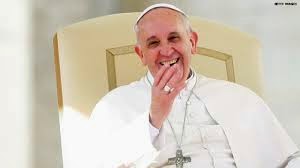
Pope Francis' top 10 secrets to happiness


By Carol Glatz

Slowing down, being generous and fighting for peace are part of Pope Francis' secret recipe for happiness.

In an interview published in part in the Argentine weekly "Viva" July 27, the pope listed his Top 10 tips for bringing greater joy to one's life:

1. "Live and let live." Everyone should be guided by this principle, he said, which has a similar expression in Rome with the saying, "Move forward and let others do the same."


2. "Be giving of yourself to others." People need to be open and generous toward others, he said, because "if you withdraw into yourself, you run the risk of becoming egocentric. And stagnant water becomes putrid."

3. "Proceed calmly" in life. The pope, who used to teach high school literature, used an image from an Argentine novel by Ricardo Guiraldes, in which the protagonist -- gaucho Don Segundo Sombra -- looks back on how he lived his life.

"He says that in his youth he was a stream full of rocks that he carried with him; as an adult, a rushing river; and in old age, he was still moving, but slowly, like a pool" of water, the pope said. He said he likes this latter image of a pool of water -- to have "the ability to move with kindness and humility, a calmness in life."

4. "A healthy sense of leisure." The pleasures of art, literature and playing together with children have been lost, he said.


"

Consumerism has brought us anxiety" and stress, causing people to lose a "healthy culture of leisure." Their time is "swallowed up" so people can't share it with anyone.

Even though many parents work long hours, they must set aside time to play with their children; work schedules make it "complicated, but you must do it," he said.

Families must also turn off the TV when they sit down to eat because, even though television is useful for keeping up with the news, having it on during mealtime "doesn't let you communicate" with each other, the pope said.

5. Sundays should be holidays. Workers should have Sundays off because "Sunday is for family," he said.

6. Find innovative ways to create dignified jobs for young people. "We need to be creative with young people. If they have no opportunities they will get into drugs" and be more vulnerable to suicide, he said.

"It's not enough to give them food," he said. "Dignity is given to you when you can bring food home" from one's own labor.

7. Respect and take care of nature. Environmental degradation "is one of the biggest challenges we have," he said. "I think a question that we're not asking ourselves is: 'Isn't humanity committing suicide with this indiscriminate and tyrannical use of nature?'"

8. Stop being negative. "Needing to talk badly about others indicates low self-esteem. That means, 'I feel so low that instead of picking myself up I have to cut others down,'" the pope said. "Letting go of negative things quickly is healthy."


9. Don't proselytize; respect others' beliefs. "We can inspire others through witness so that one grows together in communicating. But the worst thing of all is religious proselytism, which paralyzes: 'I am talking with you in order to persuade you,' No. Each person dialogues, starting with his and her own identity. The church grows by attraction, not proselytizing," the pope said.

10. Work for peace. "We are living in a time of many wars," he said, and "the call for peace must be shouted. Peace sometimes gives the impression of being quiet, but it is never quiet, peace is always proactive" and dynamic.

Wednesday, 23 July 2014

Five Ways to Sanctify Your Day

By SAM GUZMAN

We all live busy lives, rushing to work, running errands, and navigating rush hour traffic. With all the busyness, it’s hard to live a prayerful life and be mindful of God’s presence, even if we want to. But ultimately, quietness comes from within,  and incorporating holy habits into our lives can help us keep recollected in the midst of all the noise and chaos of the modern world.
Here are five simple ways to slow down and live a more peaceful and prayerful life.

1. Spend Time in Prayer in the Morning

Trust me, I know how hard it can be to drag yourself out of bed in the morning. The feeling of grogginess can be hard to shake. But is important to start the day with prayer. In my own experience, my day is productive and peaceful in direct proportion to my ability to get out of bed and spend time in prayer and spiritual reading. When I do this, I find myself more peaceful, more patient with others, and more recollected to God’s presence throughout the day.  But when I hit the snooze button, the rest of the day, including my interactions with others, seems to suffer.
I know it can be difficult to know what to do when you make time for prayer, so I will share my own morning routine in a future post.

2. Say A Hail Mary

When I sit down at the computer, my first impulse is to start anxiously checking emails and reading my favorite news websites. Instead of giving into this impulse, however, I have gotten in the habit of saying a Hail Mary before I do anything else—many times before I even turn on my computer. I ask Our Lady to bless my day and guide my priorities. My work day is inevitably less stressful and hurried when I start it in this way.

3. Say the Angelus

The Angelus is a beautiful, time-honored prayer that reminds us of the miracle of the incarnation and the importance of conformity to the will of God. It is also a great way to pause, turn your heart to Our Lord, and take a deep breath, so to speak, in the middle of a hectic day. Traditionally, it is prayed at the noon hour, so maybe you could start your lunch break by praying it.
We don’t all have jobs where we can pray the Angelus, but if you do, I would encourage you to set an alarm and pray it tomorrow.

4. Pray the Rosary

The rosary is one of the most popular and well known Catholic prayers, and for good reason. When prayed with concentration and devotion, it is one of the best prayers we can pray. Our Lady of Fatima asked all the faithful to pray the rosary daily, so it should be the one prayer we manage to pray, even if we can’t make time for anything else.
Consider praying the rosary after dinner. It is a great way to spend time with Jesus in Mary at the end of your day. If you have a family, pray it as a family. If you can’t find time during the day, try praying in the car on the way to work. Whatever you do, pray the rosary.

5. Examine Your Conscience Before Bed

Sin is a reality, and chances are, we are saying, thinking, and doing things that are displeasing to God throughout the day. If you don’t think so, you are deceiving yourself. Go to bed with a clean conscience by examining yourself daily. Pause before bed, cast your mind’s eye over your thoughts and interactions with others, and ask yourself if you’ve done anything displeasing to God. Then, think of  Jesus crucified, full of love for you. Tell him you are sorry for your failings and resolve to do good by saying an act of contrition.

Conclusion

It is easy to get distracted and forget God’s presence throughout the day. Reminding ourselves of God’s presence often requires sanctifying our day with good daily habits.

Friday, 24 January 2014

THE NATURE OF SIN


I recall the physics lessons in high school, specifically that of the elasticity of springs. If my memory serves me right- which I have no doubt it does for it has religiously stored my numerous memories even from childhood- the physics teacher demonstrated how springs are able to extend when they are loaded. You add a load to the spring and it stretches, you offload it and the spring returns to its original shape and size. You load the spring again with a larger load and it stretches more and with the removal of the load it regains its shape and size albeit taking more time. However when the spring is loaded with too much load, it stretches and straightens, never to return to its original shape and size even after the removal of the load. This my analogy might be alien to those who loved to hate their physics teachers but forgive me for it fits my use here in.
One starts with a clear conscience of what wrong and right is, then they choose to test the wrong and feel what it is like. Of course that is easy, what will it hurt just to do it once? What is one puff, one bottle, one night? After all am not an addict I will just stop when I have had this one. The poor soul leads itself to the trapping of its own doing. After this, one feels guilty and deeply sorrowful for having erred.  With the first experience comes the heightened need for more and if one gives in to the urge, they add more load to the spring.  And as the spring is loaded more and more, it loses its elasticity. One feels less guilty now and what they used to condemn they start defending. Their guilt is lost and they feel nothing, they act like nothing and as they soil themselves in sin, they convince themselves with vanity of their lost verbosity.
I surely witnessed this on my way to Kayole in the famous Green and Yellow Forward traveller buses. A large sticker on the bus read “I FEEL NOTHING” and surely the driver and conductor in that bus felt nothing. The unkempt hair of the driver revealed it, what is more, he must have either been blind or ‘felt nothing’ for he paid no heed to any of the traffic rules. The conductor was not better, his breath almost made people drunk, he screamed to everybody even those who were a stone throw from him. They however made me closer to God for I said countless prayers in that bus.
All in all, the nature of sin is in feeling nothing. One starts with a conscious mind clearly knowing right from wrong but with bowing to pressure mostly for pleasure, the conscious is desensitized and what they used to detest is now praised and defended for they feel nothing. Guard your conscious and let it not be loaded beyond repair for you will feel nothing and be nothing but will not even realize as you will be foolishly happy in the firth of nothingness.
RITH@


Tuesday, 14 January 2014

HEAR MY PLEA


I call upon you for you will answer me; bend your ear and hear my whisper. Guard me as the pupil of the eye; hide me in the shade of your wings for far from you my foes multiply. Let not your grace depart from me for I have tasted and seen that you are good and sufficient for me. Twice have I known of how your love is great: once when I stayed under your wings and drank from your cup of loving grace and then when I departed trying in vain to forge my path alone.
How great thou art that you open the palm of your hand and feed the whole world. You are to be praised for in you all who search for peace rejoice. Those who seek your face you reveal to them in full the glory of thy being. From dust your breath makes into being that which had no being. When we revolt and turn our faces from your light, who but you makes us see the darkness in us? Who is He that washes us whiter than snow when we stain our given life? Who purifies and restores these vessels when we have corrupted them to the core? When as scarlet our sins are red, who does cleanse us and save us from ourselves?
Let not your goodness and mercy depart from me for any moment. You strengthen me to stand tall when I sit by thyself, hear my plea you who are the light and guide my path by your truth that I may not be far from you. Hear this plea and grant the desire to be by you for I have tested and known that I deceive myself in revolting for you are the source and detachment from you will be alienation from hope and life.
(Inspired by homily from Fr. Kanja 2012)
RITH@.


Wednesday, 4 December 2013

HEALTH


Of what use is it to a man if he gains the whole world and looses his own soul? When a man’s body is ill, he labours ceaselessly in search of a physician to prescribe remedy. Bitter herbs and tabs he takes to regain his health. With improved health the man relaxes and says to himself’ all is well’. Of what value is it if I gain my physical health when my spiritual health is below the poverty line? What is the delight in having a healthy body carrying a wrecked spirit? What wisdom is there in rejoicing having a healthy body while the life of the body cries of ailment?
When the body is well, the carrier ought to labour ensuring that the spirit is healthy too for what good would it be to have a clean cup having foul contents? The spiritual is ever more superior to the physical. Man must thus not be content when all is well with his body but with the healthy body work to enrich ad keep his spirit in order.
Unlike the body where one seeks different physicians, the spiritual doctor is one who is always available on call and never too busy. A journey to Him is not needed neither do we need any consultancy fees. Step of faith is the only fee, an acceptance of the filthy state of the vessels of our hearts and a genuine confession of our misdeeds are all he asks.
With this realization may we focus not only on the body but of that which transcends this life. May we not take comfort in the healthy body and forget the soul for it aches not like the body but be wise to turn our focus on the life of our life and receive grace from the source of all.

RITH@.

Sunday, 10 November 2013

JUDGING THE JUDGE


How funny are we humans that bearing in mind our immortality and being witnesses of our own limited nature, we at times bestow upon ourselves what we have no authority over, pose to take from the giver and give the destroyer yet the giver holds it all. Raising ourselves to the throne of judging over what we don’t control and rule on whom to give and take from yet we have non to give but all received in equal measure.
What audacity that drives us to judge the judge, impersonating ourselves to the mighty throne and even proclaim that we take from the giver that which He is the only possessor and to him who takes from others we proclaim to give in plenty.
Up on the high hill for all to see our triumph and his shame we raise Him bound on a tree. The pain of torn flesh and sourness of vinegar we afflict Him. A crown of thorns the king we crown and proclaim victory over Him.
To Him who gives life and breath we took both and to the murderer we gave a new lease. To Him who absorbs our pain and gives relief we repaid with pain. He who quenches our thirst until our cup rennet over we gave sour vinegar. To Him who clothes our nakedness we exposed, yet He bore all these with humility so that we may have life and have if in full.
What great pain we cause you when we tear thy flesh and shame you by our deeds; the same deeds that you suffered on our behalf for. May you stir in us to use our new lease for thy glory and for the good of humanity.

RITH@.

Saturday, 9 November 2013

THE JOY OF CONFESSION


What wisdom is there in labouring to achieve a goal yet when it is presented before your very eyes you turn away wanting yet cannot have? Seated on the pew my mind drifts away to my own world of questions and answers. “Why do I come to church? Why did I wake so early leaving the warm bed to come to church? Am I here on a routine to mark the end of another week or is it because those I love associating with are here? Why, why, why do I come to church?” all these questions bang my mind as I look at the overflown congregation and wonder why they too are here.
Some might be here because they love the routine and have been used to it; I am not a lover of routine thus I must be here for another reason. Some gather because their friends are gathered yet others to praise and worship their maker. Of all these I wonder which brings me. Why do I come sing, praise and worship? It surely is not solely for the sake of praising itself but the joy of being at peace in the Lord.
If that is my sweet and noble reason then I pause the answers and ask myself how foolish I am. Is it not the same Christ that I am seeking that the priest presented before my very eyes and instead of rushing to receive Him that I may be in Him I guiltily look away? What difference is there between me and the hired musicians whose motive is just to entertain the guests if I turn down the invitation to share in the goodness of the Lord?
I however reflect on the state of the vessel of my heart and finds guilt of its contents. I myself carry in me a witness of my own faults which are numerous. It is the weight of these that kept me on the set while others went to be with Him. It sounded prudent to sit down my vessel than add the burden by having Him in a corrupt state. But what prudence is there in a young person; the epitome of God’s good creation, refraining from being at peace with God?
Is it my sin or folly that keeps me in the filth of my own deeds? It’s my not sin but foolishness I see that keeps me from God. My sins He is ready to forgive and make the base of my vessel as white as snow if only I turn and repent. Just a step of faith and acceptance of my faults are enough to compel me to seek the face of the Lord. In seeking His face will I repent and by my confession regain the status as His beloved son. Why then don’t I turn y face to the light of His grace and be at peace?
A troubled man I resolve to leave my folly; I will go to my father and ask for pardon and I am sure he will not deny me to be with Him. After the pardon I now feel lighter and at peace. I am now merry heeding the call to receive Him to be in me for I am in Him. All the folly is gone and as my heart sings praise from the depth of my soul to the highest of mountains, I confess how sweet the source of my delight is. Am glad that in Him my soul has found rest and invites other too to taste His kindness and see that He is good.

RITH@.

Tuesday, 5 November 2013

RESTLESS HEART


Mighty are thy deeds, great are your works oh Lord who sunrise till sundown labour ceaselessly gathering a people to yourself. You are indeed good Oh Lord and all you have created deserves to give you praise. Man; a little piece of your creation desires to sing you praise from the depth of his heart to the highest of mountains. Bearing in himself his mortality carry in him the witness of his own sins yet you stir in him to take pleasure in praising you since you have for yourself made us and our hearts would remain restless were they not to rest in thee.
Grant me to know and understand, you whose wisdom is immeasurable. Why does man; the epitome of your good creation, turn against the light of your graceful face and try to follow what he thinks as his own? Work of your hands and breath of your breath ought to labour doing that which pleases you. Oh merciful Lord, you are more democratic than the most democratic of our nations. So unrestrictive that you would not though in a position to restrict our will. You continue to call us to yourself but don’t restrict our willing away when we choose.
You are greater than the great and lesser lights; your face illuminates the world and brightens all it falls on. Yet Oh Lord we turn our backs to your light and face away enjoying the beauty of the creation you illuminate forgetting to praise you their source and keeping ourselves from the grace of thy light. What folly is in us that thou witnesses that you resist the proud; we pride ourselves in enjoying what you have rightfully created as thou we owned it and give no regard to you?
You open your palm and all that you have created is fed, in you the troubled get their rest. You never turn back those who come back to you nor hide your face to the prodigals tired of soiling with the pigs. All you ask for is that we seek you and praise your holy name, yet where other than in we are we to seek you? You are already in us for from your breath we breathe and in you we exist. Were it not for you in us, our being would not be sweet source of our delight and life of our life.
Surely man deceives himself in his wisdom; of which your folly is wiser thou you are not foolish, in trying to look for you in external creatures that stem from you not knowing you are in his own being. Grant that I should live in you, who never leave me, so that thy staff will guide me and your ear inclined hear my praise. For you and by you may I not leave the protection of your wings nor roam from the joy of knowing you. May I experience the pleasure of sucking from you the divine infancy food of which my cup overflows than experience the heat of forging my blind path away from your lighted face. May my restless heart find delightful rest in you.

RITH@.

Wednesday, 7 August 2013

7 GREAT IDEAS ON PEAK PERFORMANCE

I FOUND THESE IDEAS AND I THOUGHT, WOW! I THINK YOU WILL TOO!!

7 Black Belt Insights for Elite Achievement

Success in September
By Robin Sharma
Author of the #1 International Bestseller “The Leader Who Had No Title”
Hope all’s superb.
Sorry I haven’t been in touch with a blog post or training video for a while. I was on vacation with my family at a pretty little town by the sea.
Needed it. This year’s been intense so far with presentations in about 20 countries, writing a new book, a new train the trainer program and a hot new self-mastery summit my team and I kicked off in June…
If you’ve read my book “The Leader Who Had No Title” you know I strongly believe that a giant key to best performance is alternating periods of intense productivity with periods of deep renewal. So I was out by the ocean walking my talk.
Ok. So I’ve got some REALLY juicy + provocative insights for you today. To fuel the last 6 months of 2013. And to help you make sure this becomes your absolute best year yet…
…As mentioned, in June, over one truly unforgettable weekend in beautiful Toronto, Canada (one of the world’s great cities), people from over 30 countries attended my new self-mastery event called “The 48 Hour Transformation” (T48T).
Blew me away what unfolded…
We had a few billionaires with us, top executives, tons of entrepreneurs, peak athletes, artists, authors and other brave dreamers from so many walks of life ready to shatter their limits and achieve 20X the results they’d ever seen before.
Deeply held fears were released, all-new levels of confidence were installed, ridiculously positive mindsets were constructed and childhood dreams were rekindled.
What could be cooler than being a part of that?
And the transformations I witnessed by Sunday really were truly phenomenal. I feel BLESSED to have just been there.
Such inspiration, positive energy, devotion to world-class and commitment to making the world a better place.
So to be of service to your highest ambitions, I wanted to share 7 of the “black belt” ideas that were so valuable to the hundreds of people who attended, based on what they told me after the event.
My real hope is they will serve as catalysts for you to start making some radical changes in your own life:
#1. NOTHING WORKS UNTIL YOU DO THE WORK.
Look, the only thing that’s rocket science is rocket science.
The material, systems and daily performance rituals I taught at The 48 Hour Transformation work beautifully. But like anything, you need to make the commitment and then do the work. Not once a quarter. Not once a month. Daily. When you’re tired. When you don’t feel like it. When you want to give up. That’s how champions play.
And please also remember that consistency is the essence of mastery. Show up, practice hard, stay at it and awesome results will come.
#2. TO GET THE RESULTS ONLY 5% OF THE POPULATION GETS, HAVE THE GUTS TO DO WHAT ONLY 5% DO.
You can follow the herd or you can transform your world. But you can’t do both.
The majority of people have given up on living a “rare air life”. Sad.
They’ve been smacked down, told “no” to and hypnotized into performing at average so long they don’t believe in their genius any more.
What I helped people at the event to rewire as a core belief is that to have uncommon results, you need to start doing uncommon things. I then listed the 20+ best tactics including:
–being a part of a mastermind group of people who are exceptional
–joining The 5 am Club and running the 20/20/20 Rule
–seeing work as a craft and an opportunity for Mastery
–doing a “second wind workout” at the end of every day to kickstart energy and creativity
–getting a massage every week to stay strong and focused
–60 minutes a day without technology to think and plan
–journalling every night
#3. IF YOU’RE NOT FAILING A LOT YOU’RE NOT DOING VERY MUCH
Failure’s got a bad rap.
Failure’s necessary to win.
Failure is part of the learning process. It’s valuable. It’s helpful. It’s massively instructive.
But society teaches us that failure’s a mistake. It’s not. Da Vinci and Picasso and Jobs and Meg Whitman all understood that you can’t make progress without “beautiful setbacks.”
Understand that failure’s a kind teacher. Just leverage the data it delivers for even more success.
#4. CHANGE IS HARD AT FIRST, MESSY IN THE MIDDLE AND GORGEOUS AT THE END.
This idea really moved people at T48T. Inspired them. Helped them to viscerally get that change is a process.
At the beginning of any change (from losing weight to stopping worry to multiplying your sales to saving more money), you’re fighting the gravitational pull of your old habits.
And if you’ve practised those habits every day for decades, how can we expect them to be replaced in a day (the latest research from University College of London says it takes 66 days to install a new habit).
So it’s hard at first. And so most of us give up. But if you stay with it, you get to stage 2 and that’s where your old habit starts to crumble. And your new one begins to form. It’s messy at this point. Confusing. A little scary. And completely normal.
And then, with grit and devotion, the new habit becomes your new normal. This is a great time on the journey to unleashing your potential. And life’s never the same.
#5. SMALL DAILY IMPROVEMENTS OVER TIME LEAD TO STUNNING RESULTS
An amazing life isn’t constructed via revolution: one bold act on a sunny Tuesday that makes you great.
Nope.
All exceptional achievement (whether it’s chess mastery, entrepreneurial success, athletic championship or financial wealth) is the result of daily, consistent actions that over time creates explosive results.
It’s all about the hard work.
It’s all about the steady practice.
It’s all about the insane levels of persistence.
And if you do it (and start saying no to all of those time wasting activities so many of us are seduced by in this Age of Dramatic Distraction), you too will get to your mountaintop.
#6. TO DOUBLE YOUR INCOME, TRIPLE YOUR INVESTMENT IN LEARNING
Powerful idea: once you know more, you can achieve more.
The other night my Dad reminded me that “investing in education is the best investment of all.”
And I still recall a long lunch with a man who built a fortune where he shared “the years I spent three hours a day in personal development were the most financially rich years of my life.” Three hours. Each day. In learning. Studying. Improving. My hero.
If you really want to get to great in the important areas of your life, invest in the books. Go to a conference every quarter. Spend the cash on the online course. Download the audiobooks. And hang with the best (bonus tip: mindsets are contagious).
#7. YOU HAVE THE LIFE YOU’VE SETTLED FOR
This idea had people at The 48 Hour Transformation talking all weekend.
Attendees really got that awesome lives are not built on a foundation of excuses.
Sure-it’s easier to blame others or conditions for the lives we have. That way we don’t have to leave The Safe Harbor of The Known and make any changes. But that’s how cowards live, no?
We have the lives we’ve created.
We’re living the lives we’ve settled for.
And if your life isn’t working, it’s not because of anyone else or anything else. It’s because of us. Our beliefs (that drive our behavior). Our fears. Our habits. And our actions.
The moment you wrap your brain cells around this idea and accept APR (Absolute Personal Responsibility), life is NEVER the same.
You start taking back your power. Doing the difficult things. Taking chances and making leaps. Life gets exciting and colorful and precious and fantastic.
You deserve to live at world-class. So make your changes today.
Hope this post helps you win. And I hope you’ll post a comment below so we continue the conversation.
Your fan always,
- See more at: http://www.robinsharma.com/blog/07/7-black-belt-insights-for-elite-achievement/#sthash.qUclH9Le.dpuf